
Roof Leak
Repair
The stain on your ceiling is almost never underneath the hole. We find where water is actually entering — because patching the wrong spot is why most roof leaks come back.
Water Doesn't Fall
Straight Down
Water enters your roof at one point, then travels. It runs along the underside of the decking, down a rafter, across a truss chord — and drops through your ceiling somewhere else entirely.
Six feet away is common. Twenty feet happens. On a low-slope roof, water can move a long way before it finds the first gap in the drywall.
Which is why so many roof repairs fail. Somebody goes up, looks at the area above the stain, finds nothing obviously wrong, seals what they can see, and leaves. It rains again. The stain comes back — usually a little bigger.
Finding the entry point means working backwards from where the water shows up, through the attic where there's access, to where it's actually getting in. That takes longer than a patch. It's also the only version that works.
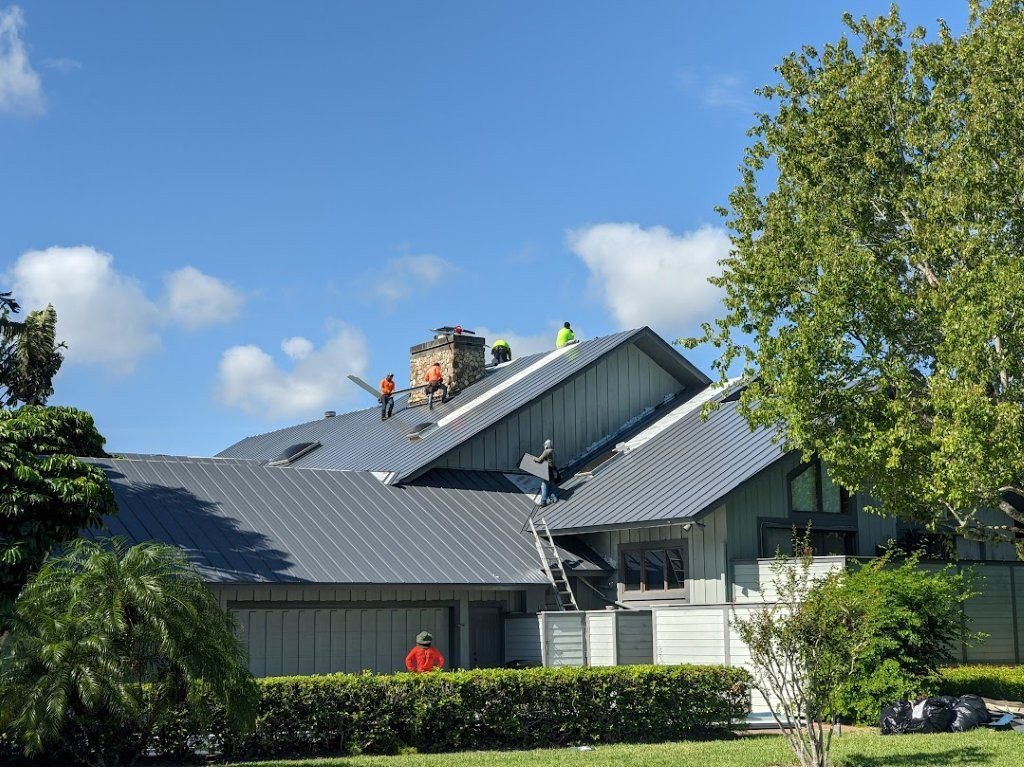
Tracing a leak back to its entry point, not its exit point
Roofs Don't Leak
in the Middle
In our experience the open field of a roof is almost never the problem. Leaks happen where two things meet, or where something passes through. These are the eight places we check first.
How We Find
Your Leak
We start inside
Where is the stain, what shape is it, and does it change after rain? A ring that grows is active. A dry, hard-edged stain may be historic. We photograph everything before anyone goes on the roof.
Then the attic, where there's access
This is where leaks are usually solved. Water leaves tracks on decking and framing — dark staining, rust trails on nail shanks, damp insulation. Those tracks lead uphill to the entry point.
Then the roof itself
We go to the area the attic pointed us to, and check every penetration, flashing, and transition in that zone. We photograph what we find — including anything else worth knowing about while we're up there.
Water testing if we need it
On a stubborn leak we'll run water over sections of the roof in sequence, starting low and working up, with someone watching inside. It's slow and it's conclusive.
You get the findings in writing
Photographs, where the water is entering, why, and what it will take to fix. Plus an honest read on whether a repair is the right answer at all — that section is below.
Water Coming In Right Now?
This page is about finding leaks whose source isn't obvious. If water is actively running in, or a ceiling is bulging, that's a different call — see emergency roof repair, or just phone (561) 970-3626. We'll talk you through the next ten minutes before we even discuss scheduling.
Signs You Have
an Active Leak
When a Repair Isn't Worth It
If this is your third leak in two years, in different places, the roof is telling you something. Individual repairs are treating symptoms of a system that's reached the end of its life — usually the underlayment rather than the covering.
We'll say so when we see it. Spending $600 three times over eighteen months, on a roof that then needs replacing anyway, is worse than knowing in month one.
On tile especially, the answer is often a lift and relay — your existing tile reset over fresh underlayment, at roughly 60–70% of a full replacement. That conversation is worth having before you spend more on patches.
And When It Absolutely Is
Plenty of leaks are one cracked pipe boot, one lifted flashing, one section of valley. On a sound roof with years left, that's a genuine repair and we'll quote it as one.
Florida's building code generally permits localised repair where the work affects less than 25% of the roof area in any twelve-month period. Plenty of roofs sold as "beyond repair" sit comfortably under that line — if yours does, we'll tell you.
What We Repair
| Where they typically leak | |
|---|---|
| Shingle | Pipe boots, wall flashing, valleys, and lifted ridge cap. Wind damage that isn't visible from the ground. |
| Tile | Cracked or slipped tiles, failed mortar at ridges and hips, and — most often — underlayment that has aged out beneath perfectly good tile. |
| Metal | Fastener washers on exposed-fastener systems, flashing at transitions, and seam separation after wind. |
| Flat & low-slope | Seams, penetrations and curbs, blocked drains, and ponding that has degraded the membrane. |
We work on homes, condos, HOA properties, and commercial buildings. For managed properties we can provide per-building documentation — see commercial roofing.
What Makes Us Different
We Go in the Attic
Where access exists. It's where most leaks are actually solved, and it's the step a quick patch job skips entirely.
Findings in Writing
Photographs of the entry point, why it's failing, and what the fix involves. Yours to keep whether or not you hire us.
We'll Tell You to Stop
If you're repairing the same roof repeatedly, we'll say so. Three patches on a roof that needs relaying is money you don't get back.
Two State Licenses
Roofing CCC1332394 and general contracting CGC1533052. If water has reached decking, fascia, or framing, we repair it directly.
Every System In-House
Shingle, tile, metal, and flat. We're not guessing at a system we don't install — we've built roofs in all four.
The Owner Walks Roofs
Ronny Hanna runs the jobs that matter and answers the phone when something goes wrong after the check has cleared.
Roof Leak Repair FAQs
Why is the stain not directly under the leak?
Because water travels. It enters at one point, then runs along the underside of the decking, down a rafter, or across a truss until it finds a gap in the ceiling. Six feet of travel is common and twenty feet happens. This is the single biggest reason roof repairs fail — somebody seals the area above the stain rather than where water is actually getting in.
How much does roof leak repair cost?
It depends entirely on what's causing it. A cracked pipe boot is a small job. Failed flashing at a chimney is a bigger one. Failed underlayment beneath tile isn't a repair at all. We inspect first, tell you what's actually wrong, and quote the real fix in writing — the inspection itself is free either way.
Can you find a leak that other roofers couldn't?
Often, yes — and it's a common reason people call us. The usual explanation is that the previous inspection looked only at the roof above the stain. Working backwards from the attic, following water tracks on the decking and framing, finds entry points that aren't visible from the roof surface at all.
My leak was repaired and it came back. Why?
Almost always because the repair addressed where the water appeared rather than where it entered. Occasionally because there were two leaks and only one was found. Either way, a returning leak is a diagnosis problem, not a materials problem — and it's fixable once someone traces it properly.
Can a leak be repaired without replacing the whole roof?
Frequently. Florida's code generally allows localised repair where the work affects less than 25% of the roof area within any twelve-month period. If your roof is otherwise sound and the leak is isolated, a repair is the right answer and that's what we'll quote. If you've had multiple leaks in different places, we'll tell you honestly that you're treating symptoms.
How long does a leak repair take?
The inspection typically takes an hour or two depending on attic access and how obvious the source is. Most repairs are completed the same day or the next, once we know what we're fixing. Water testing on a stubborn leak adds time — it's slow work, and it's the thing that settles it.
Should I get a leak looked at if it's only occasional?
Yes. A leak that only appears in heavy, wind-driven rain is still a leak — and water is reaching your decking and insulation every time it happens, whether or not it makes it to your ceiling. Intermittent leaks are also easier to trace before the surrounding material is saturated.
Which areas do you serve?
We're licensed statewide, with crews working regularly through Martin, St. Lucie, Palm Beach, Broward, and Southwest Florida — including Stuart, Palm City, Port St. Lucie, Jupiter, West Palm Beach, Boca Raton, Fort Lauderdale, Naples, and Fort Myers.
Related
Water coming in right now? Emergency roof repair — answered 24 hours. Not sure whether you have a leak at all? Start with a free roof inspection.
If the diagnosis points at the roof rather than one spot on it, see roof replacement — or, on tile, a lift and relay, which resets the waterproofing at roughly 60–70% of replacement cost. Most Florida leaks trace back to the underlayment rather than the covering above it.
Find Out Where
It's Actually Coming In
Free inspection, attic included where there's access, and photographs of the entry point in writing. If your roof needs more than a repair, we'll tell you that instead.