
Modified Bitumen
Roofing
The workhorse membrane of Florida's flat roofs — the porch tie-ins, additions, and low-slope sections behind parapets that most homes here have somewhere. It's also where most of those homes leak first.
The Flat Part of Your Roof
Fails First
Most Florida homes with tile or shingle up top have a flat section somewhere — over the porch, the lanai, the addition, the garage tie-in. It's usually invisible from the street, it drains slower than everything above it, and it takes the runoff from the entire sloped roof. Which is why it's almost always where the house leaks first — often years before the tile or shingle shows any age at all.
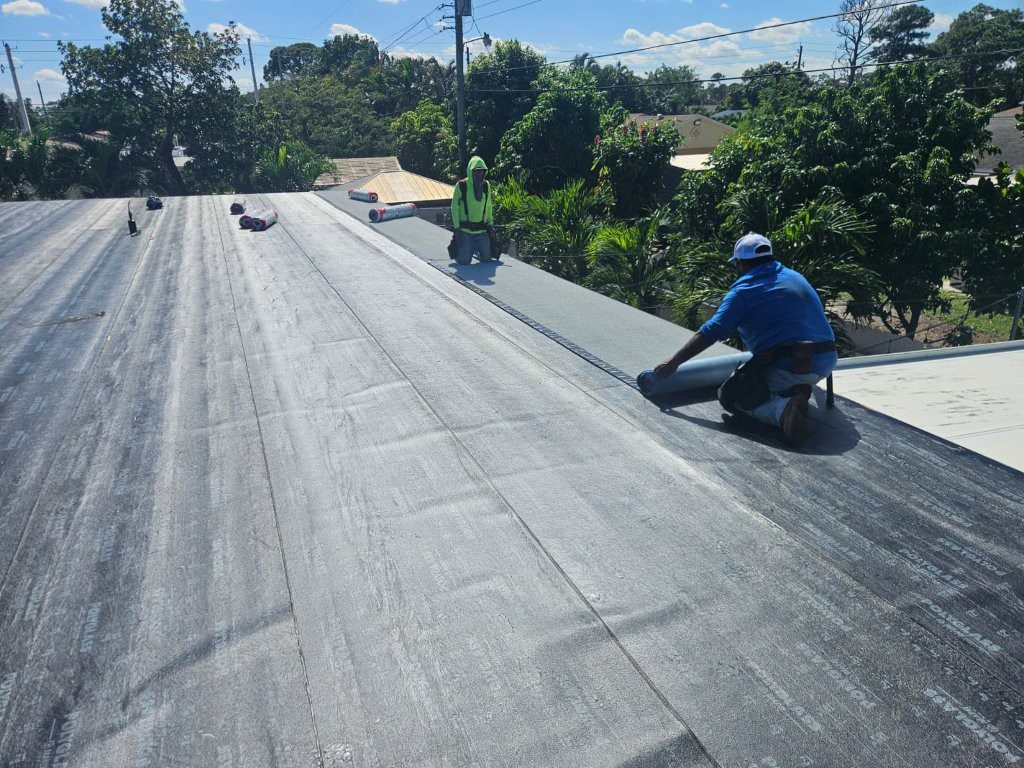
Modified bitumen is the system built for exactly this. An asphalt membrane reinforced with polymer — rubberised SBS or plastic-modified APP — finished with a granulated cap sheet, it's thicker and more puncture-resistant than single-ply, tolerant of the foot traffic that AC service brings, and it ties into the sloped roof above it cleanly.
The catch is that it lives and dies at its seams and edges. A mod bit roof installed with disciplined laps and proper flashings runs 15–25 years in Florida. The same material rushed by a low bidder starts leaking at year six — at the wall it meets, not in the middle of the field. The material is proven; the installer is the variable.
Repair, Replace,
or Restore
A flat-section leak doesn't automatically mean a flat-section replacement. The membrane's age, the condition of its seams, and whether water has reached the decking decide which of three very different price tags applies.
Mod Bit Repair
Open seams, splits at the wall flashing, blisters, ponding damage, and punctures from foot traffic. Repaired with matching membrane properly torched or adhered in — not smeared with roof cement, which buys one rainy season and ruins the surface for real repair.
Replacement
Tear-off to the deck, rotted decking replaced per sheet at a price agreed up front, new base and cap sheets — self-adhered where open flame near the structure is unwise, torch-applied where the detail work demands it. Permitted and inspected.
Silicone Restoration
An ageing-but-dry mod bit roof is an ideal candidate for a fluid-applied silicone system — the granulated surface takes the coating well, and the restoration renews the waterproofing without a tear-off.
What Mod Bit Work in Florida Actually Involves
—Torch-applied vs self-adhered
"Torch down" is the name everyone knows, but open flame against a house has obvious risks and some details are safer without it. Self-adhered (peel-and-stick) mod bit has closed most of the performance gap, and we commonly run self-adhered base with the cap system the geometry calls for. You'll see which is specified, and why, on the proposal.
—SBS vs APP
SBS is rubber-modified — flexible, forgiving of building movement. APP is plastic-modified — stiffer, with strong UV tolerance. Both are proven in Florida; the choice follows the application method and the roof's details rather than marketing. We name the system on the spec so bids can be compared honestly.
—The tie-in is the job
Where the flat section meets tile or shingle above is where the water concentrates and where cheap installs fail. Proper base flashing height, metal work, and lap sequencing at that junction matter more than anything happening in the middle of the roof. It's the detail we photograph and document on every job.
—Ponding water
Mod bit tolerates incidental ponding better than asphalt built-up roofing, but standing water 48 hours after rain still shortens its life. Where slope can't be corrected with tapered insulation, that's precisely where the silicone restoration path earns its keep later — silicone resists ponding permanently.
—Granules and reflectivity
Cap sheets come in white and reflective finishes that meaningfully drop the surface temperature of a Florida flat roof — which slows the ageing of the membrane itself and the comfort of whatever room sits below the flat section. It's a no-cost decision made at ordering time, so we make it deliberately.
—Permits, wind zone, and HVHZ
Flat-section replacements are permitted and inspected like any reroof, with fastening and approval requirements set by your wind zone — High-Velocity Hurricane Zone work in Broward and Miami-Dade under its own approval system. The permit file is yours to keep, and it matters at sale and insurance time.
Two Things You Can Check Without a Ladder
Look at the ceiling of the room under the flat section. Porch, Florida room, addition, garage — faint tea-coloured staining or bubbling paint at the wall line is the flat section announcing itself. It's telling you about the tie-in, and it's cheapest to answer early.
Check the gutters and ground below the flat section for granules. Heavy granule wash-off means the cap sheet is shedding its UV armour. The membrane isn't leaking yet — but its countdown has started, and this is the window where restoration is still on the table.
Every Flat Roof Path We Offer
Modified bitumen is the residential flat-roof answer. Depending on the building and the membrane's condition, one of these may fit better — and we'll tell you which before quoting anything.
TPO
Heat-welded reflective membrane — the standard answer on larger commercial low-slope roofs and bigger residential flat areas.
TPO Systems → Fluid-Applied RestorationSilicone Roof Coating
Renews an ageing-but-dry flat roof without tear-off — permanent ponding resistance and a renewable warranty at a fraction of replacement cost.
Silicone Coating → Multi-Building & HOACommercial Roofing
Per-building condition reports and board-ready pricing for associations and commercial property with flat roofs at scale.
Commercial Roofing →Modified Bitumen FAQs
Is "torch down" the same thing as modified bitumen?
Torch down is one way of installing modified bitumen — the membrane is heat-fused with an open-flame torch. The same family of membranes also comes self-adhered (peel-and-stick) and cold-applied. If you've been told you have a torch down roof, this is the system, and everything on this page applies to it.
How long does a modified bitumen roof last in Florida?
15–25 years, and the spread is almost entirely installation quality. The seams, edge details, and the tie-in where the flat section meets the sloped roof decide which end of that range you get — the field membrane itself rarely fails first on a properly installed roof.
My flat section leaks but my tile roof is fine. Is that normal?
Completely — it's the most common configuration of leak we see. The flat section drains slowest, takes the runoff from the entire sloped roof above it, and is usually a decade older in effective wear than its age suggests. The good news: fixing or replacing a flat section is a far smaller project than the reroof you may have been fearing.
Can you repair it, or does the whole flat section need replacing?
Depends where it's failing. Seam, flashing, and penetration failures on a membrane with life left are genuine repairs. Brittleness, widespread granule loss, or wet decking under the membrane means replacement — and moisture readings, not guesswork, make that call. The inspection includes them, and you keep the photo report either way.
Mod bit or TPO for my flat section — which is better?
For typical residential flat sections — porches, additions, tie-ins with foot traffic from AC service — mod bit's thickness and puncture resistance usually win. For large, open low-slope areas, TPO's welded seams and reflectivity often make more sense. It's a per-roof answer, and we'll give you ours with reasons, not a brand pitch.
Is torching safe on my house?
In trained hands and with fire-watch procedures, yes — but where details run near soffits, walls, or combustible framing, we specify self-adhered membrane instead and skip the debate entirely. The spec tells you exactly which method is being used where, before anyone is on the roof.
Can my old mod bit roof be coated instead of replaced?
Often, and it's one of the best coating candidates there is — silicone bonds well to a prepared granulated surface. The condition that matters is underneath: the decking must be dry. Coating over trapped moisture seals the problem in, so moisture readings come first. If it qualifies, restoration runs a fraction of replacement. See silicone roof coating.
Does insurance care about my flat section?
Increasingly, yes — Florida carriers commonly ask the age of every roof section separately, and an aged flat section can hold up a policy even when the main roof is new. A documented, permitted flat-section replacement resets that clock, and it's recorded in the wind mitigation report where your insurer will actually see it.
Find Out What Your Flat Section
Actually Needs
Repair, replacement, or restoration — the inspection is free, the moisture readings make the call honestly, and if your flat section has good years left, that's exactly what the report will say.