
Silicone Roof Coating
Without the Tear-Off
A seamless, fully adhered silicone membrane over your existing roof. No demolition, no dumpsters, no exposed decking — and a manufacturer warranty of up to 20 years.
A New Roof Surface,
Not a New Roof
Silicone restoration puts a continuous, waterproof membrane over the roof you already have — sealing every seam, penetration, and flashing in one unbroken surface.
Most flat roofs don't fail across the whole field. They fail at the joints: seams that opened up, drains that were never flashed properly, pipe boots that dried out and cracked. The deck underneath is usually still sound.
When that's the case, tearing the roof off means paying to replace a great deal of material that was doing its job. Restoration repairs the failure points, reinforces them, then coats the entire roof in silicone — leaving no seams for water to find.
The result is a roof that sheds water like a new one and carries a manufacturer warranty like a new one, at roughly a third of the cost.
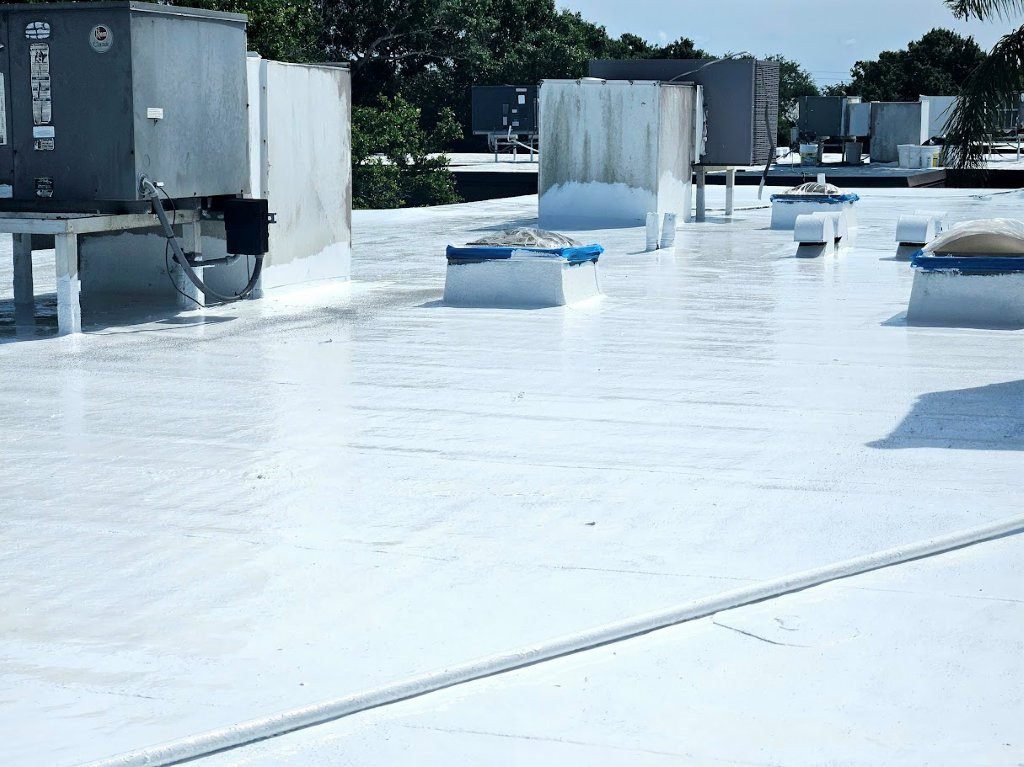 -->
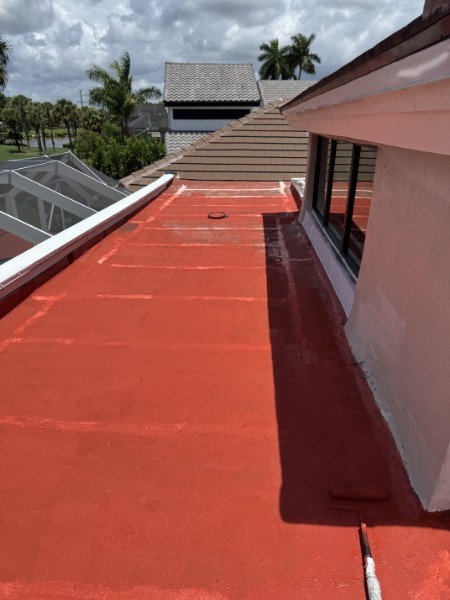
-->Completed silicone restoration — no tear-off, no dumpsters, building stayed occupied
Restoration vs. Full Replacement
| Silicone Restoration | Full Tear-Off Replacement | |
|---|---|---|
| Cost per sq ft | $4 – $8 | $12 – $25 |
| Timeline | 2 – 5 days | 2 – 4 weeks |
| Building occupied | Yes, throughout | Significant disruption |
| Debris & dumpsters | None | Multiple loads to landfill |
| Exposed decking risk | None | Open roof during storm season |
| Warranty | Up to 20 yrs, renewable by recoating | 10 – 20 yrs, then tear off again |
| Requires a sound deck | Yes — we verify first | No, the deck is replaced |
Restoration isn't always the right answer. If our moisture survey finds widespread saturated insulation or a failing deck, we'll tell you replacement is the better investment — and we'd rather lose the coating job than sell you one that fails.
Does Your Roof Qualify?
Silicone works on most low-slope roofs — but not all of them. Here's how we decide, and we decide it before you've committed to anything.
Usually a Good Candidate
- Modified bitumen, built-up (BUR), TPO, EPDM, or metal
- Aged or chalking coatings that are still bonded
- Isolated leaks at seams, drains, or penetrations
- Ponding water with a dry deck underneath
- Roofs 8–20 years old that were never properly maintained
Needs Repair First — or Replacement
- Widespread saturated insulation
- Soft or deteriorated roof deck
- Membrane separating from the substrate across large areas
- Structural drainage problems coating can't solve
Every assessment starts with a moisture survey and a photo report. If your roof doesn't qualify, you'll get that in writing — along with what we'd recommend instead. See our roof inspection process or explore flat roof repair options.
Before & After
A Florida flat roof that was leaking at three penetrations and ponding across the low corner. Restored in four days with the building fully occupied.
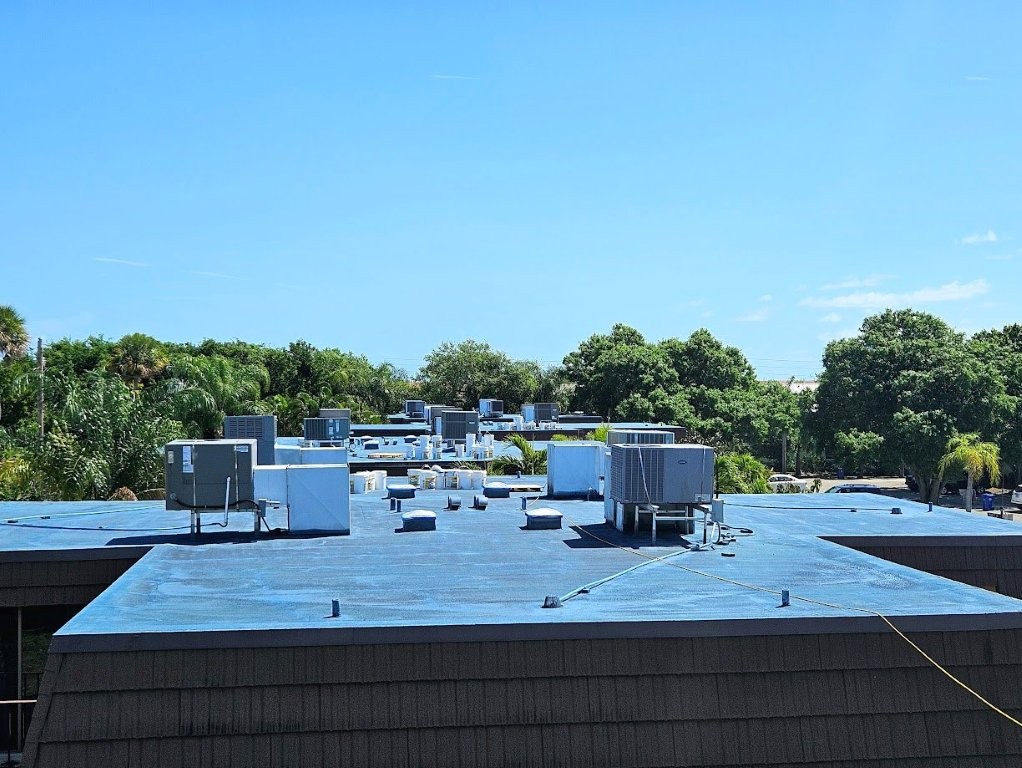
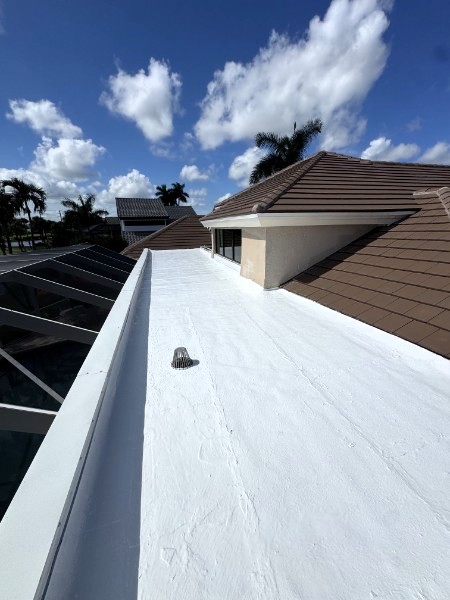
GacoFlex S4200
We specify GacoFlex S4200, a 100% silicone single-coat system built for exactly the conditions Florida roofs face: permanent ponding water resistance, high solar reflectance, and UL Class A fire-rated assemblies.
Coverage rate is measured and documented at application — not estimated afterward. That documentation is what makes a manufacturer warranty enforceable rather than decorative, and it's the single most common step skipped by contractors who quote coating work cheaply.
Ask any coating contractor for their documented coverage rate and wet-film thickness readings. The answer tells you most of what you need to know about the job you're being sold.
Why Silicone, Not Acrylic
Acrylic coatings cost less and breathe well, but they re-emulsify under standing water. On a Florida flat roof that drains slowly, that's a short clock.
Silicone doesn't soften, doesn't wash off, and doesn't care how long water sits on it.
Manufacturer-reported initial solar reflectance. Florida Product Approval FL#_____ — add your approval number here or delete this line.
How a Restoration
Actually Runs
Moisture survey and photo report
We map wet areas before quoting anything. Coating over saturated insulation traps the water and guarantees failure — so this step decides whether we proceed at all.
Wet sections cut out and replaced
Any saturated insulation comes out and gets replaced with dry material. This is priced in the original scope, not discovered later as a change order.
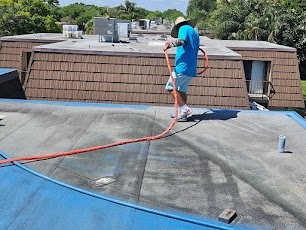
Full power wash and prep
The entire roof is cleaned to remove chalk, dirt, and biological growth. Silicone bonds to a clean surface or it doesn't bond at all.
Seams, drains and penetrations reinforced
Every seam, curb, pipe boot, and drain gets detailed with reinforcing fabric and base coat. This is where roofs leak, and where cheap coating jobs cut corners.
Silicone applied to specified thickness
Coverage rate documented as we go, with wet-film thickness readings recorded. Those readings are what the manufacturer requires to honor the warranty.
Manufacturer inspection and registration
We schedule the inspection and register your warranty. You receive the documentation package, not a promise that we filed it.
The Work Itself
Built for Multi-Building Portfolios
We provide per-building condition reports, a single specification and warranty across an entire property, and scopes that identify wet areas and required repairs before work begins rather than as change orders afterward.
Buildings stay occupied. There's no tear-off noise, no dumpsters in resident parking, and no exposed decking during hurricane season. For boards weighing a reserve study against a special assessment, restoration usually changes the math considerably.
We work with boards and property managers throughout Martin, St. Lucie, and Palm Beach counties, and statewide on larger portfolios. See our commercial roofing services.
Frequently Asked
How long does silicone roof coating last?
A silicone restoration typically lasts 10 to 20 years depending on specified thickness, roof condition, and sun exposure. Manufacturer warranties are available in 10, 15, and 20-year terms. At the end of the term the roof is cleaned and recoated rather than torn off — which restarts warranty coverage without a replacement.
Can silicone roof coating stop leaks?
Yes, when the roof beneath it is sound. The cured membrane is seamless and fully adhered, and installation includes repairing and reinforcing every seam, penetration, and flashing — which is where almost all flat roof leaks begin. Roofs with saturated insulation need those wet sections cut out and replaced first. Our moisture survey identifies them before any coating goes down.
Can silicone be applied over my existing roof?
In most cases, yes. Silicone bonds over modified bitumen, built-up roofing, metal, TPO, EPDM, and aged coatings, provided the deck and insulation are dry and structurally sound. Our free assessment determines whether your roof qualifies — and we'll tell you honestly if it doesn't.
How much does silicone roof coating cost in Florida?
Silicone restoration typically runs $4 to $8 per square foot installed. The range depends on roof size, existing condition, repairs needed before coating, specified thickness, and warranty term. For comparison, full tear-off and replacement of a flat roof generally runs $12 to $25 per square foot. We provide a free inspection and a detailed written quote before any work begins.
Is silicone a good choice for Florida's climate?
It's arguably the best-suited coating chemistry for Florida. Silicone is UV-stable under intense sun, stays flexible through heat cycling, and — unlike acrylic — doesn't soften or break down where water ponds. Given how many Florida flat roofs drain slowly, that single property matters more here than almost anywhere else in the country.
What's the difference between silicone and acrylic coatings?
Acrylic coatings cost less and breathe well, but they re-emulsify under standing water, which makes them a poor fit for flat roofs with slow drainage. Silicone costs more per square foot and handles ponding water permanently. On a Florida low-slope roof, silicone almost always wins on total cost over the life of the roof.
Will a silicone coating lower my energy bills?
A bright white silicone surface reflects most of the solar heat a dark roof absorbs — manufacturer-reported initial solar reflectance is around 0.85. That lowers rooftop temperature substantially and reduces air conditioning load. Actual savings vary with your insulation, HVAC equipment, and how the building is used.
Does the coating come with a warranty?
Yes. Qualifying installations carry manufacturer-backed material and labor system warranties of up to 20 years, plus our own written workmanship warranty. We handle the manufacturer inspection and warranty registration, so the coverage comes from the coating manufacturer — not just from us.
How long does the installation take?
Most residential and small commercial roofs are completed in two to five days, depending on square footage, repairs required, and weather. There's no tear-off, no dumpster, and no exposed decking, so your building stays occupied and operating throughout.
Do you work with condo associations and property managers?
Yes. We provide per-building condition reports, a single specification and warranty across multiple buildings, and scopes that identify wet areas and required repairs before work begins rather than as change orders afterward. We work with boards and property managers throughout Martin, St. Lucie, and Palm Beach counties.
Find Out If Your Roof
Qualifies for Restoration
Free moisture survey and photo report. A straight answer on whether coating is right for your roof — including if the answer is no.