
Emergency
Roof Repair
Water coming in? Call now. We'll talk you through what to do in the next ten minutes, then get a crew and a tarp to you.
What to Do
in the Next Ten Minutes
Do these while you're waiting. They take a few minutes and they materially reduce what the damage ends up costing you.
Do not go on the roof
Not in rain, not in wind, not to "just take a look." A wet roof is the single most common way homeowners get seriously hurt during a storm, and there is nothing you can do up there that we can't do safely. Everything below is done from inside your house.
Kill the power to the affected area
If water is anywhere near light fixtures, ceiling fans, or outlets, switch off that circuit at the breaker. Water and electricity in a ceiling cavity is the one part of this that can genuinely hurt someone.
Move what you can
Furniture, rugs, electronics, papers — out of the room or covered with plastic. Water spreads sideways across a ceiling before it comes through, so clear more space than the drip suggests.
Contain the water
Buckets under active drips, towels around them. Empty before they overflow. If water is pooling in a ceiling and bulging the drywall, a small hole at the lowest point of the bulge lets it drain in one controlled place instead of bringing the whole section down.
Photograph everything, now
Wide shots of each affected room, then close-ups. Include the ceiling, the walls, the floor, and anything damaged. Do it before you clean up — the "during" photos are the ones that matter later and they're the ones everybody forgets to take.
Note the time and the weather
When you first saw water, and what the weather was doing. Sounds trivial. It isn't — establishing when damage occurred and what caused it is far easier now than three weeks from now.
Then Call Us
Tell us where the water is coming in, what your roof is made of if you know, and whether anyone is in the house. We'll tell you honestly whether this needs a crew tonight or whether it can safely wait until morning — sometimes it can, and we'd rather say so than charge you for an after-hours call you didn't need.
(561) 970-3626 — answered 24 hours.
Stop the Water First.
Everything Else After.
An emergency call has one job: stop water entering the building. Diagnosis, quotes, and permanent repair all come later — and none of them matter if your ceiling is still coming down tonight.
We find the entry point, get a properly fastened tarp or temporary seal over it, and check the interior for water that's tracked somewhere you haven't noticed yet. Water rarely comes in directly above where it appears.
Then we photograph everything — the damage, the cause, and what we did about it — and leave you the file. That documentation is worth more than the tarp, and most contractors don't bother.
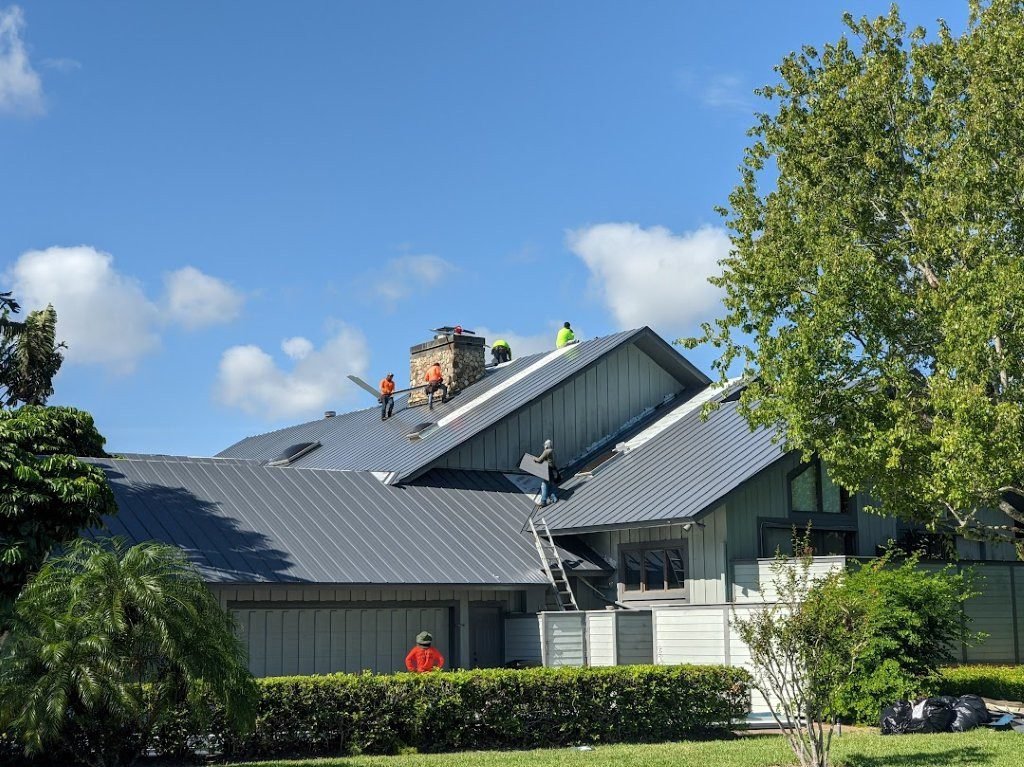
Emergency response — stabilise first, diagnose second
Is This Actually
an Emergency?
Not everything needs a crew at 11pm, and we'd rather tell you that than take the call fee. Here's how we'd judge it.
| Situation | Our honest answer |
|---|---|
| Water actively running in | Call now. Every hour of active intrusion spreads through insulation and framing. |
| Ceiling bulging or sagging | Call now. That's a pooled volume of water about to come through at once. |
| Tree or large debris on the roof | Call now. Weight plus a breached surface, and it may be resting on structure. |
| Visible hole or missing section | Call now if rain is forecast. Otherwise first thing in the morning is fine. |
| Shingles or tiles blown off, no leak yet | Morning is fine. Get it tarped before the next storm, but tonight changes nothing. |
| A stain that appears after heavy rain | Not an emergency. Book a leak repair — you need the source found, not a tarp. |
| Storm passed, damage unclear | Not urgent. Book a storm damage assessment and get it documented properly. |
If you're unsure which of these you have, call and describe it. That conversation is free and takes two minutes.
What We're Usually
Called Out For
How an Emergency
Call Runs
We talk it through on the phone
Where the water is, what your roof is, whether anyone's at risk. We'll give you the immediate steps above and an honest read on whether this needs a crew tonight.
Crew dispatched
Same day on most calls, statewide. Weather permitting — we won't put people on a roof in active lightning, and no reputable contractor will either.
Source located, water stopped
Entry point found and a properly fastened temporary cover installed. Not a tarp thrown over and weighted with bricks — fastened so it holds through the next band of weather.
Interior checked
Attic and affected rooms inspected for water that's tracked somewhere you haven't seen. Catching that now is the difference between drying out a ceiling and replacing framing.
Everything documented
Photos of the damage, the cause, and the work performed, with the date. You get the complete file — whatever you decide to do with it.
Permanent repair quoted
Once the water's stopped and the weather clears, we assess properly and quote the real fix — repair or replacement, with line-item pricing in writing. No pressure to decide at midnight.
About Storm-Chasers
After every major Florida storm, out-of-state crews arrive, knock doors, and offer to "handle everything." Some are fine. Many are unlicensed, uninsured, and gone before the first winter.
Two things to check on anyone who knocks on your door, including us. Ask for the Florida license number and verify it at the DBPR licensee search — it takes thirty seconds on your phone. And never pay a large deposit up front to someone who arrived unsolicited.
Ours is CCC1332394. We've been in Stuart for years and we'll be here when your warranty matters.
On Insurance
We're roofing contractors, not public adjusters, and we don't handle claims — that's a separately licensed profession in Florida and anyone telling you otherwise should give you pause.
What we do is document. Dated photographs of the damage, the likely cause, the emergency work performed, and the condition of the roof. That file belongs to you, and it's what your carrier or your own adjuster will ask for. Talk to your agent about coverage — they're the ones who can actually answer it.
What Makes Us Different
A Real Person Answers
24 hours. Not an answering service that takes a message and calls you back on Monday. You get someone who can tell you what to do right now.
Two State Licenses
Roofing CCC1332394 and general contracting CGC1533052. If the emergency has damaged structure — fascia, decking, trusses — we can address it directly.
We'll Say "Wait Till Morning"
If it's safe to wait, we'll tell you. We'd rather give you a straight answer at 11pm than an invoice for a call you didn't need.
Documentation as Standard
Dated photos of damage, cause, and work performed. Handed to you, not filed away. Most emergency calls leave you with a tarp and nothing else.
Local, Not a Storm Crew
Based in Stuart, working Florida year-round. We're here for the warranty, not just the week after the storm.
The Owner Answers
Ronny Hanna takes calls himself when something goes wrong. You get a name and a number, not a ticket reference.
Emergency Roof Repair FAQs
How fast can you get here?
Same day on most calls across Florida, and often within a few hours in Martin, St. Lucie, and Palm Beach counties. Response times stretch during and immediately after a major storm — everyone's calling at once. We'll give you a realistic window when you call rather than a promise we can't keep, and we'll tell you what to do in the meantime.
What should I do while I'm waiting?
Kill power to any circuit near the water, move furniture and electronics clear, contain drips with buckets, and photograph everything before you clean up. If a ceiling is bulging with trapped water, a small hole at the lowest point lets it drain in one controlled place. Don't go on the roof. Full steps are near the top of this page.
Do you do emergency tarping?
Yes. We install properly fastened temporary covering that holds through the next band of weather — not a tarp weighted with whatever's on hand. It buys you the time to get a permanent repair done properly rather than rushed in bad conditions.
How much does an emergency call cost?
It depends on the time, the location, the size of the area needing covering, and what materials the crew needs. We'll give you a figure on the phone before we dispatch — you won't get a surprise invoice. And if we think it can safely wait until morning, we'll tell you that instead, which usually costs you less.
Will my insurance cover this?
That's a question for your agent — coverage depends on your policy, your deductible, and the cause of the damage, and we're not in a position to predict it. What we provide is thorough documentation: dated photographs of the damage, the likely cause, and the emergency work performed. That file is yours, and it's what your carrier will ask for.
Do you work through the night?
We answer through the night, and we dispatch when it's safe to do so. We won't put crews on a roof during active lightning or extreme wind — no reputable contractor will, and anyone who says otherwise is telling you something about how they treat their people. If we can't safely work yet, we'll tell you what to do until we can.
Do you handle commercial and HOA emergencies?
Yes — homes, businesses, condo associations, and multi-family properties. For managed properties we can provide per-building documentation and coordinate access with your property manager. See commercial roofing.
Which areas do you serve?
Statewide, with crews based across Martin, St. Lucie, Palm Beach, Broward, and Southwest Florida — including Stuart, Palm City, Port St. Lucie, Jupiter, West Palm Beach, Boca Raton, Fort Lauderdale, Naples, and Fort Myers. Response is fastest on the Treasure Coast and in Palm Beach County.
Related Services
If water isn't actively coming in, you probably want roof leak repair — finding the source rather than covering it. After a named storm, a storm damage assessment gets everything documented properly.
Once the emergency is stabilised, the permanent fix is either a repair or a full replacement. Not sure which? Start with a free roof inspection. And if this is the third leak in two years, the answer is usually the underlayment, not the covering.
Roof Repair Across South Florida
Repair scope, pricing, and what to watch for varies by city — coastal metal failures, boom-era shingle patches, and tile matching each have their own conversation.
Water Coming In?
Call Now.
Answered 24 hours. We'll tell you what to do in the next ten minutes, then get a crew to you — or tell you honestly if it can wait till morning.