
Standing Seam
Metal Roof
Nothing exposed for wind to catch or salt air to attack. Panels lock together above the water line and fasten to hidden clips — which is why standing seam outlasts every other metal system on a Florida coast.
No Holes Through
the Water Plane
That single sentence is the whole argument for standing seam, and it's why it costs more than every other metal option.
On an exposed-fastener roof — 5V, corrugated, most agricultural panel — screws are driven straight through the face of the panel, each one sealed with a rubber gasket. Every screw is a deliberate hole in your roof, and every gasket is a countdown. In Florida heat they harden, shrink, and eventually let go.
Standing seam has no screws through the panel at all. Panels attach to concealed clips fastened to the deck, then interlock along a raised vertical seam that sits above the water plane. Water runs down the flat of the panel and never reaches a fastener.
The seams also let panels move. Metal expands and contracts significantly through a Florida day, and a panel screwed down rigidly will eventually tear at the fixings. Clips allow that movement without opening anything up.
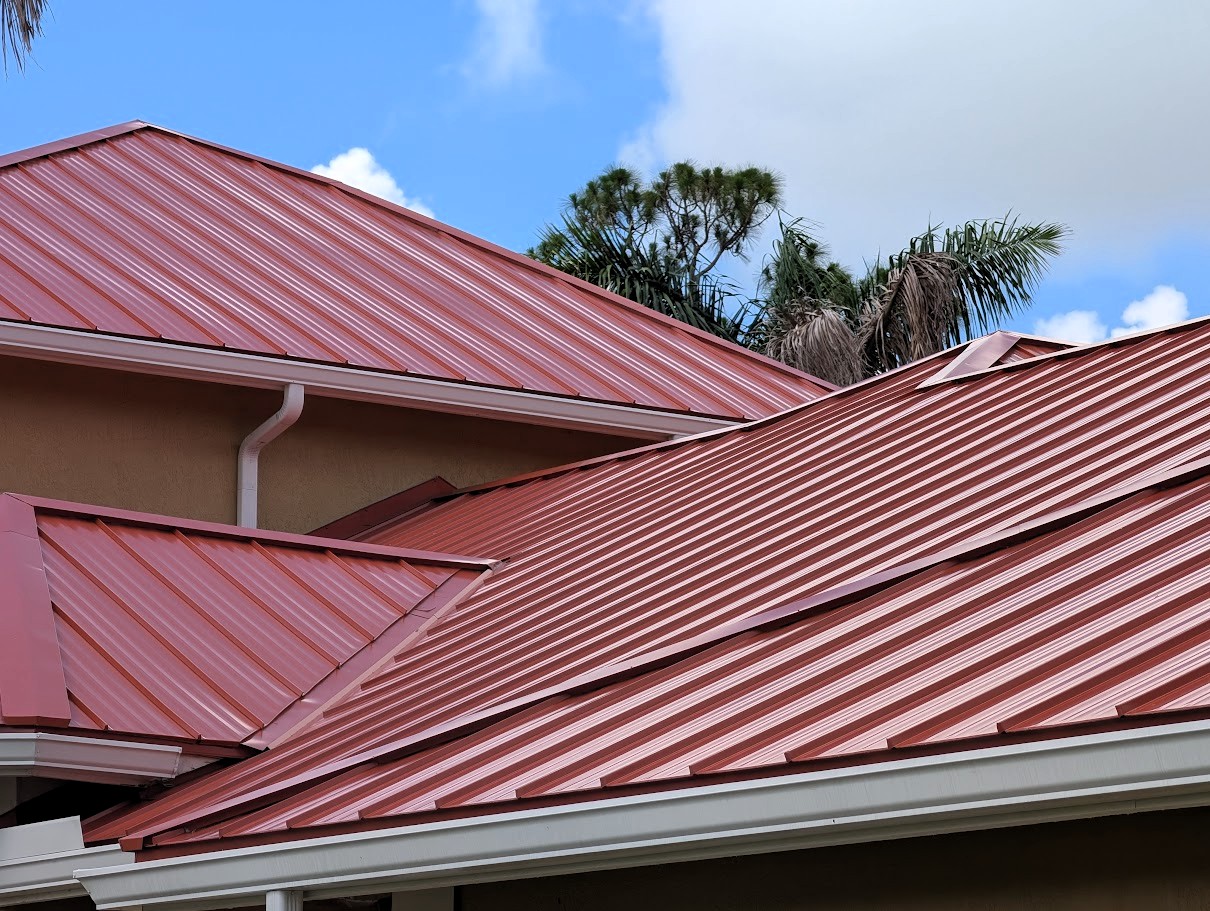
Concealed clips, interlocking seams — nothing penetrating the water plane
1-Inch or 1.5-Inch Seam?
Your roof's pitch decides this, not your budget. Most contractors quote whichever they stock and don't mention there was a choice.
| 1-inch seam | 1.5-inch seam | |
|---|---|---|
| Water shedding | Good on moderate and steep pitch | Higher water line — better on low pitch |
| Best pitch range | Steeper roofs with fast runoff | Low-slope sections and long panel runs |
| Wind uplift | Strong | Stronger seam engagement |
| Look | Finer, more subtle line | More pronounced shadow |
| Relative cost | Lower | Higher |
| Panel run length | Better on shorter runs | Handles long runs and more water volume |
The taller the seam, the higher the water has to rise before it can cross into the panel joint. On a low-slope roof or a long run where water moves slowly and volume builds, that extra half inch is doing real work. We spec it from your actual roof geometry.
Aluminium or
Galvalume?
On a Florida coast this is the single most consequential choice on the job, and it barely gets discussed.
Galvalume — steel coated in aluminium and zinc — is strong, cost-effective, and excellent inland. In salt spray it corrodes, and the closer you are to open water the faster it happens.
Aluminium costs more and dents more easily. It also does not rust, at all. Within about a mile of the ocean or the Intracoastal that one property outweighs everything else on the spec sheet.
We specify aluminium on coastal exposure and galvalume inland. If a contractor quotes you a metal roof near the water without asking how close you are, that tells you something worth knowing before you sign.
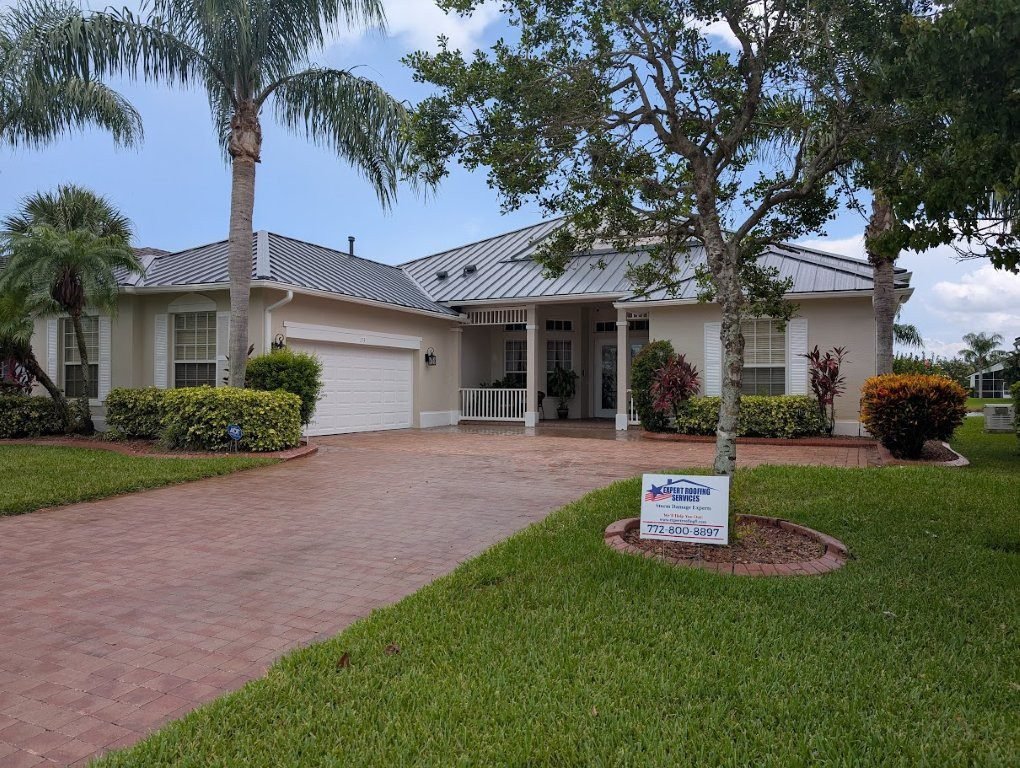
Cape Coral — canal-front exposure, aluminium panels
Gauge — 24 or 26?
24-gauge is thicker. It resists denting and oil canning better, holds flatter over long runs, and is what we recommend on any home where the roof is highly visible or the panels are long.
26-gauge costs less and performs perfectly well on smaller roofs, outbuildings, and shorter panel runs. It's not a lesser product — it's a lighter one, and on the right roof it's the sensible choice.
Oil Canning
If you buy a standing seam roof, you will probably notice slight waviness in the flat areas of the panels at certain angles and times of day. It's called oil canning, and it is the number one thing homeowners are surprised by after installation.
It's not a defect. It's an inherent characteristic of light-gauge metal formed into wide flat planes — the metal is under tension, and it relieves that tension by flexing very slightly. Every metal roof manufacturer says the same thing in their literature, usually in small print near the back.
What genuinely reduces it:
Thicker gauge
24-gauge holds flatter than 26. More material, more rigidity, less flex.
Striations or ribs in the pan
Fine lines rolled into the flat area break up the plane so the eye reads texture rather than waviness. This is the most effective single measure and it costs very little.
Narrower panels
A 12-inch pan oil cans less than an 18-inch pan. Narrower means more panels and more labour, but a visibly flatter roof.
A flat, properly prepared deck
Panels telegraph whatever is underneath them. A wavy deck produces a wavy roof no matter what you spend on the metal.
We'd Rather Tell You Now
We raise oil canning during the estimate, not after installation. It's uncomfortable to explain that a premium roof will have a visible characteristic you didn't expect — but it's far worse to find out afterwards and assume something went wrong.
If a perfectly flat surface matters to you, tell us at the estimate. We'll spec striated pans, 24-gauge, and narrower panels — and if that pushes the price past what you want to spend, we'll say so rather than quietly leaving them out.
Colour & Coating
Standing seam comes in a wide range of factory-applied finishes — from standard architectural colours through to metallics and weathered-look coatings.
The coating matters more than the colour. Premium fluoropolymer finishes hold their colour and gloss under Florida UV far longer than standard polyester coatings, and they carry substantially longer finish warranties. On a roof meant to last forty years, a finish that chalks in twelve is a false economy.
Lighter and reflective colours perform measurably better on cooling load than dark ones, and several carry cool-roof ratings. If your attic runs hot, that's worth weighing alongside how the colour looks.
We bring physical samples to your home. A colour chip under showroom light and a full roof in Florida sun are two different things.
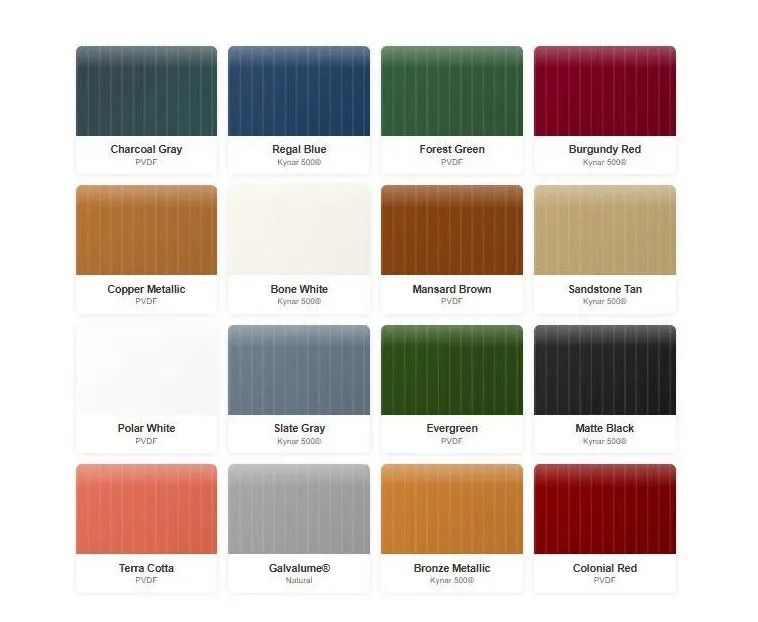
Premium finish collection — samples brought to your home
What You're Buying
Nothing Exposed
No screws through the panel face. No gaskets to harden and fail. The most common metal roof failure mode simply doesn't exist here.
Built for Salt Air
Aluminium panels on coastal exposure don't rust. Combined with concealed fixings, there's very little for salt to work on.
Highest Wind Zones
Clip systems and seam engagement give tested assemblies suited to Florida's highest wind requirements, including HVHZ configurations.
40–50 Year Life
Roughly twice a shingle roof. For an owner planning to stay, that's one roof instead of two and a half.
Reflects Heat
Reflective finishes shed solar heat rather than pushing it into your attic — with cool-roof rated colours available.
Clean Modern Line
Uninterrupted vertical lines with no visible fixings. It's the reason architects specify it as often as engineers do.
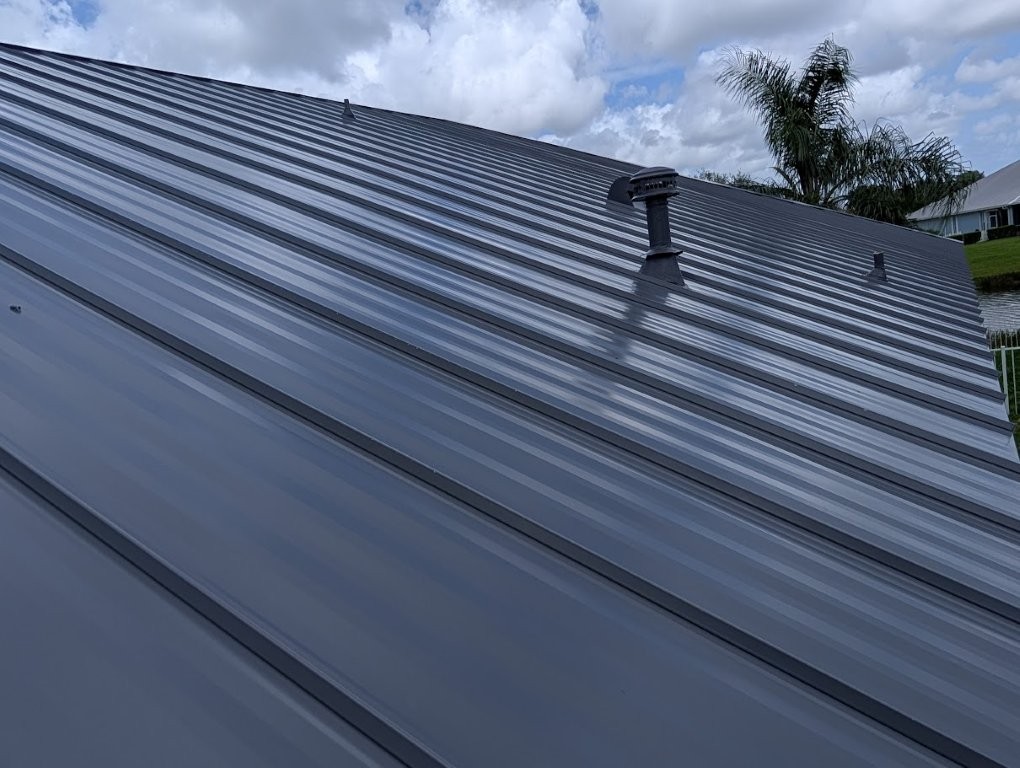
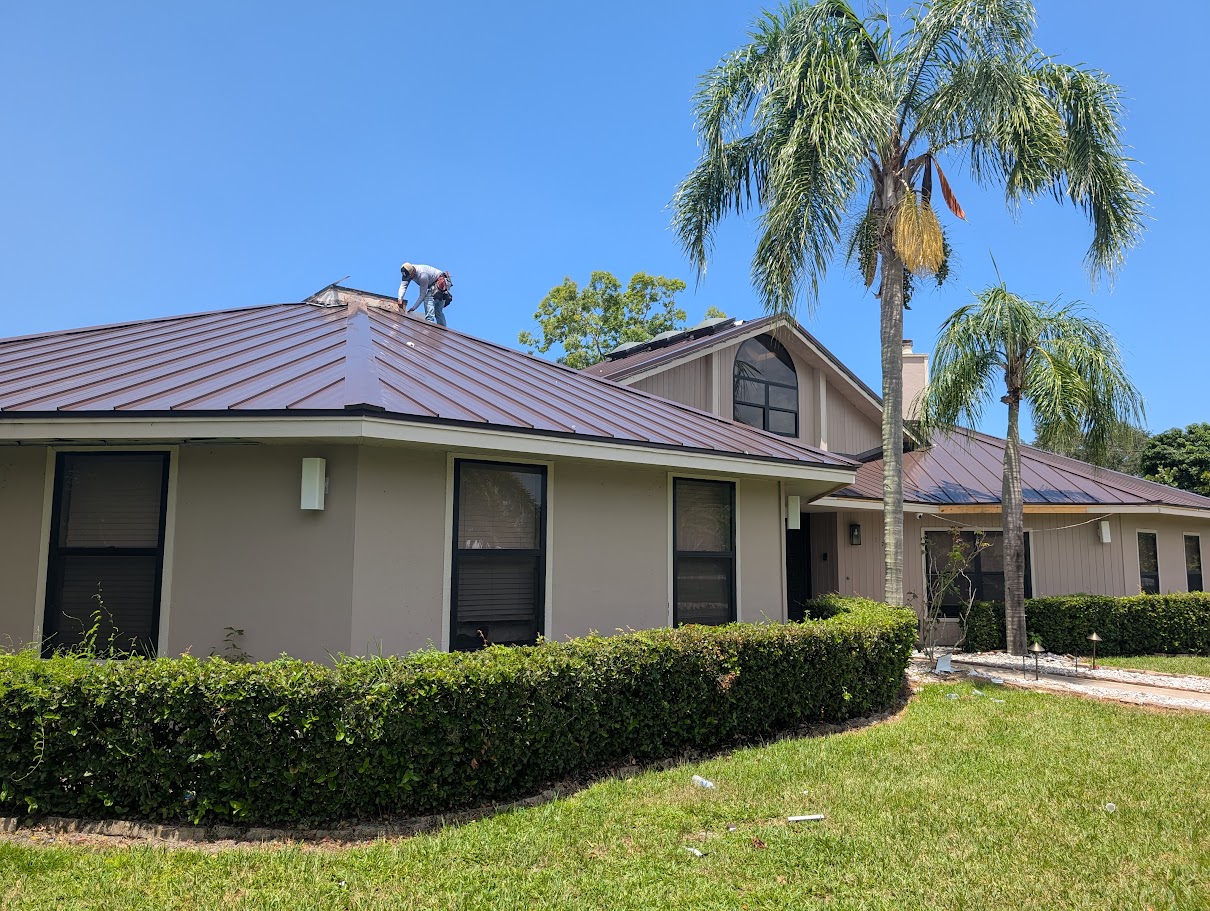
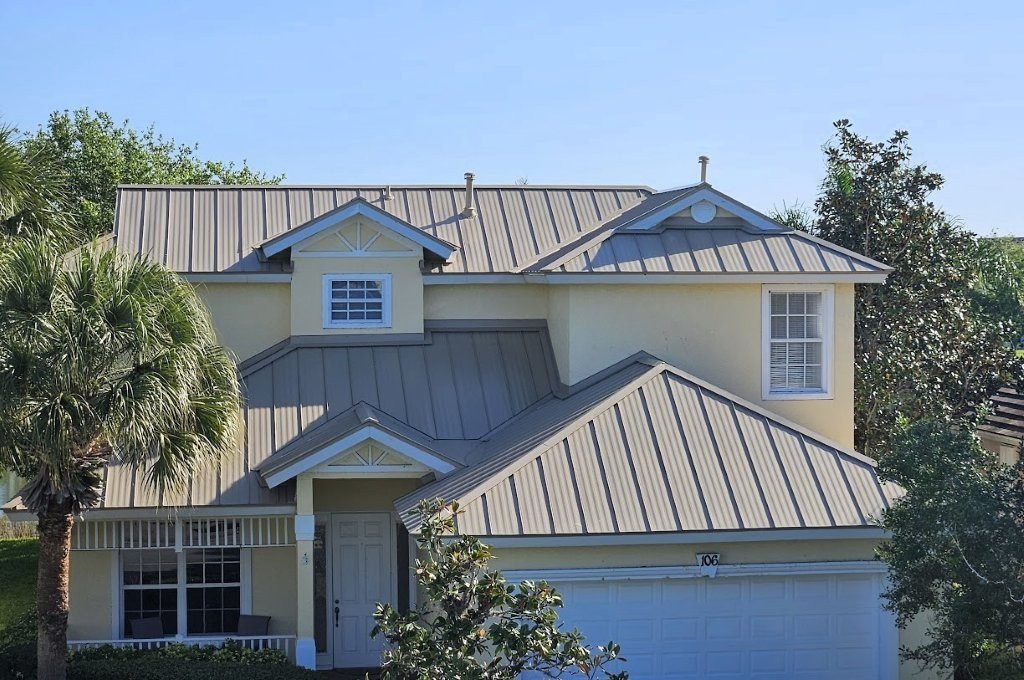
Standing Seam We've Installed
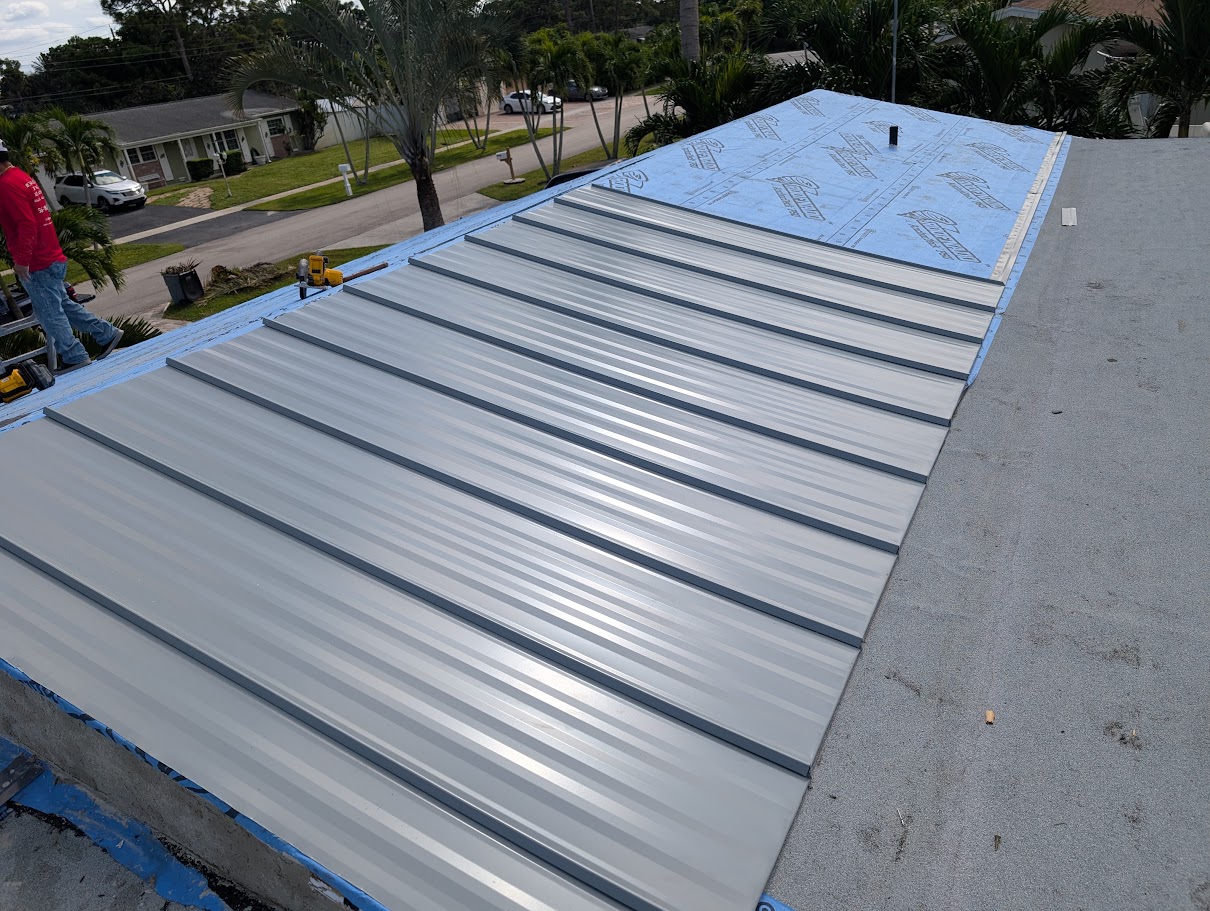
More in our project gallery.
Standing Seam Specifications
| System type | Concealed fastener, clip-attached standing seam |
| Seam heights | 1" and 1.5", specified to roof pitch and panel run |
| Gauge options | 24-gauge and 26-gauge |
| Materials | Aluminium (coastal) and Galvalume (inland) |
| Fastening | Concealed clips to deck — no penetrations through the water plane |
| Underlayment | High-temperature rated self-adhered membrane |
| Typical lifespan | 40–50 years, correctly specified for exposure |
| Fire rating | Class A assemblies available |
| Finish warranty | 40 years depending on coating |
| Workmanship warranty | 7 years, in writing |
| Florida Product Approval | FL29523 — Miami-Dade approved configurations available |
Wind ratings apply to the complete tested assembly — panel, gauge, clip type, clip spacing, underlayment, and deck. Change any one and the rating no longer applies. Ask any contractor for the approval number covering the exact assembly they're quoting.
The Underlayment Under Metal Is Different
Metal roofs run considerably hotter than shingle or tile — surface temperatures on a dark panel in a Florida August are severe. Standard self-adhered membrane degrades under that heat, and once it does you have no waterproofing left beneath a roof that's supposed to last forty years.
We specify high-temperature rated self-adhered underlayment on every metal installation. It costs more. It's also completely invisible the moment the panels go on, which is exactly why it's one of the most common things left out of a cheap metal quote.
Standing Seam FAQs
How long does a standing seam metal roof last in Florida?
Correctly specified for your exposure, 40 to 50 years — roughly twice a shingle roof. Coastal homes sit at the lower end unless the panels are aluminium rather than galvalume, which is why the alloy decision matters more than any other on the job.
What is oil canning, and will my roof have it?
Slight waviness visible in the flat areas of metal panels at certain angles and light conditions. It's an inherent characteristic of light-gauge metal formed into wide flat planes, not a defect — every manufacturer acknowledges it. Thicker gauge, striated pans, narrower panels, and a properly flat deck all reduce it noticeably. We discuss it at the estimate rather than after installation.
What's the difference between 1-inch and 1.5-inch seams?
Seam height determines how high water has to rise before it can reach the panel joint. A 1.5-inch seam performs better on low-slope roofs and long panel runs where water moves slowly and volume builds. A 1-inch seam is finer looking, costs less, and works well on steeper pitches with fast runoff. Your roof geometry decides it, not your budget.
Should I choose 24-gauge or 26-gauge?
24-gauge is thicker — it resists denting and oil canning better and holds flatter over long runs. We recommend it where the roof is highly visible or panels are long. 26-gauge costs less and performs perfectly well on smaller roofs, outbuildings, and shorter runs. It's a lighter product, not a lesser one.
Is standing seam noisy in the rain?
Far less than people expect. The noise associated with metal comes from panels over open purlins — a barn. On a house, panels sit over solid decking, self-adhered underlayment, and an insulated attic. Most homeowners report it's no louder than the roof they replaced.
How much does standing seam cost compared to 5V?
Standing seam is the most expensive metal system we install and 5V crimp is the least. The gap comes from material, panel forming, clips, and considerably more labour at every flashing and penetration. What you're buying is the removal of exposed fasteners — which is the most common metal roof failure point.
Can standing seam go over my existing roof?
Physically sometimes, but we don't do it. Layering hides deck condition, prevents proper high-temperature underlayment, and complicates every future repair. On a system meant to last forty years, starting with unknowns underneath makes no sense. We tear off to the deck.
Which areas do you serve?
We're licensed statewide, with crews working regularly through Martin, St. Lucie, Palm Beach, Broward, and Southwest Florida — including Stuart, Palm City, Jupiter, West Palm Beach, Boca Raton, Naples, Fort Myers, and Cape Coral.
Related
Comparing metal systems? See 5V crimp for a traditional exposed-fastener panel at lower cost, or stone coated steel if you want metal that reads as tile. For the installation process across all three, see metal roof installation.
Weighing metal against other materials? Compare architectural shingle and concrete tile. And on any metal roof, the high-temperature underlayment beneath it matters more than most people realise. Not sure where to start? Book a free roof inspection.
Get a Standing Seam
Quote You Can Compare
Free inspection, exposure assessment, physical colour samples, and a specification that names the gauge, the alloy, the seam height, and the underlayment. So you can hold it against anyone else's.