Commercial Roofing
Is a Statewide Business
Our licences are Florida state certifications — CCC1332394 and CGC1533052 — which means we work anywhere in the state rather than registering county by county.
That matters more than it sounds on association and commercial work. A property portfolio rarely sits inside one county, and a management company running communities in Orlando, Melbourne and Palm Beach shouldn't need three contractors and three specifications to keep them consistent.
It also changes how a project gets resourced. When we take a multi-building project, we mobilise for it — the crew is on that property until it's finished, rather than splitting the week between your buildings and a book of residential jobs.
Every board that has watched a project stretch from six weeks to sixteen knows exactly what that difference is worth.
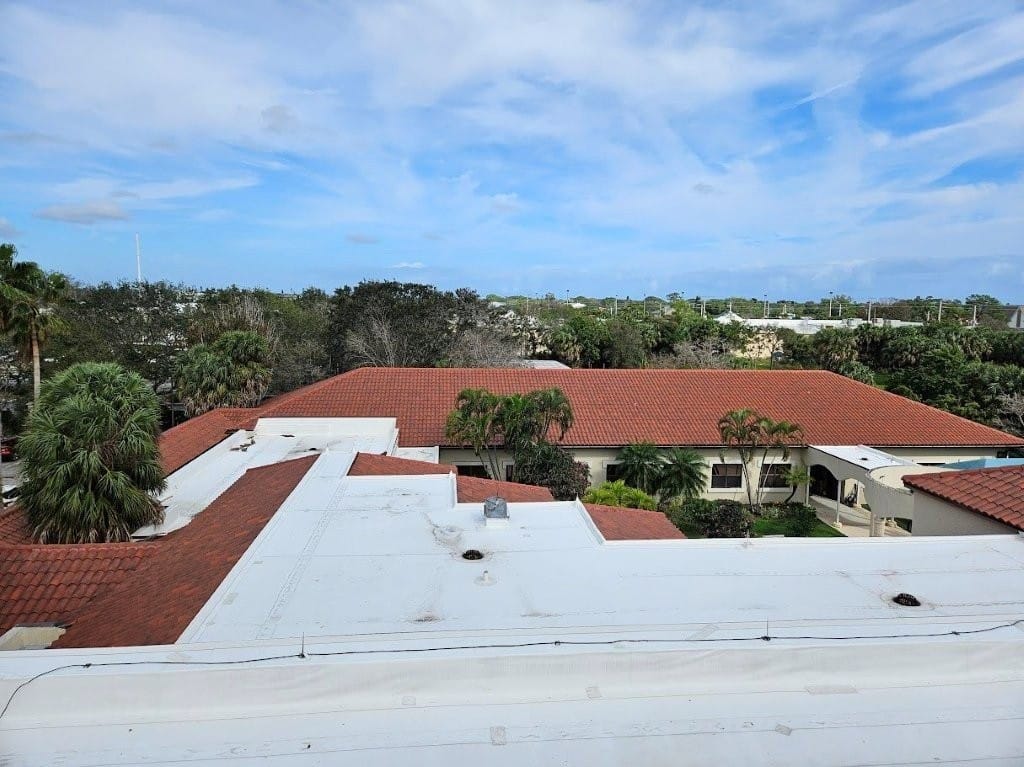 Multi-building roofing project
One specification, every building
Five buildings shouldn't end up with four different systems and four different warranties. We spec the property, not the individual roof.
Two state licences
Roofing and general contracting. When a tear-off uncovers structural work, we complete it rather than stopping the project to bring in another trade.
Dedicated project crews
A commercial project is scheduled as a block and resourced as a block. It doesn't compete with a residential book for people or material.
What This Page Is Not
This is commercial, HOA and multi-building work. Condominium associations, property managers, commercial owners and institutional buildings — projects planned in advance and scheduled properly.
Single-family residential across Central Florida isn't something we take on, and we'd rather say that plainly than take a job we can't service to the standard we'd want. If you're a homeowner, a local contractor will serve you better than we would.
Inland Roofs Fail
Differently
Most of our work is coastal, where salt drives every decision. Central Florida is a genuinely different environment, and a contractor who quotes it the same way hasn't thought about it.
Lightning
Central Florida sits in the most lightning-prone region in the United States. On tall or metal-roofed buildings that means bonding and grounding are part of the roofing conversation, not an afterthought for someone else — and strike damage to membrane and flashing is something we look for specifically here.
Afternoon storm intensity
The daily summer convective pattern delivers enormous rainfall volume in short bursts. Drainage capacity that copes on the coast can be overwhelmed inland — which is why we survey drainage before quoting membrane on any Central Florida flat roof.
Hail
More common inland than on the coast, and it damages membrane and granule surfaces in ways that don't leak immediately. On a reserve-study inspection it's one of the things a board most often doesn't know it has.
No salt
Which changes the specification in your favour. Galvalume performs excellently here where we'd insist on aluminium in Jupiter or Vero. If a contractor quotes you coastal alloy pricing in Orlando, ask why.
"How Long Does
the Roof Have?"
Florida's structural integrity and reserve requirements have made that question unavoidable — and Central Florida has one of the largest concentrations of association-governed property in the state.
It's also a question most contractors answer badly. "It's got a few years in it" is not a number a board can budget against, and it isn't something a reserve specialist can work from.
So we answer it properly: a written condition report per building, dated photographs, a drainage assessment, and a moisture survey establishing whether the insulation beneath the membrane is wet.
That last one is the one that changes decisions. If the insulation is dry, restoration may reset the clock at a fraction of replacement cost. If it's wet, coating over it makes things worse and the board needs to know that before it budgets.
It's a measurement, not an opinion. Which is exactly what a board needs when it has to defend a decision to owners.
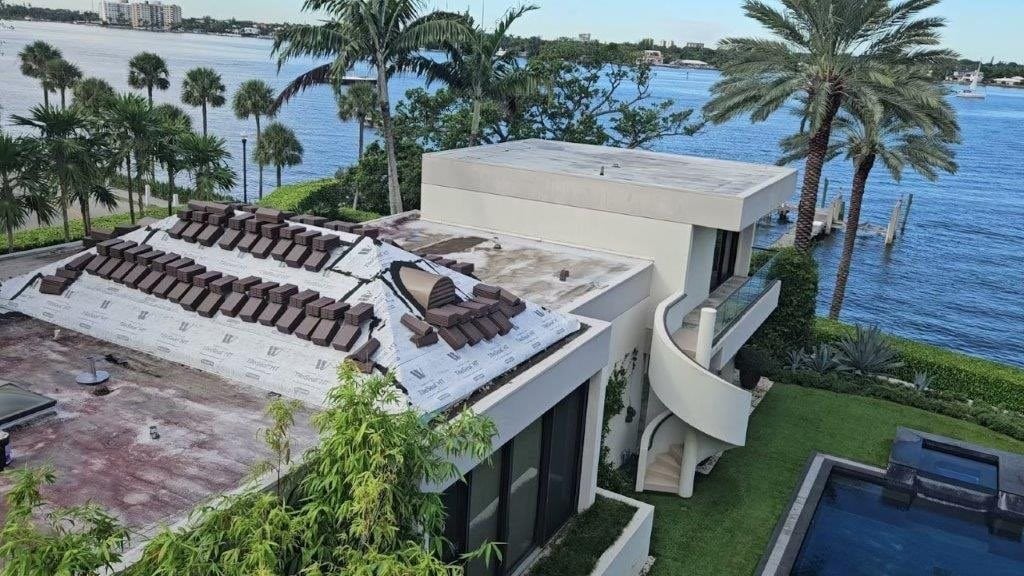
What a Board Actually Receives
Per-building condition reports — each structure assessed and photographed separately, so phasing decisions can be made building by building rather than all at once.
One specification across the property — so five buildings don't end up with four different systems and four different warranties.
Pricing broken out by building and by phase — formatted so it goes in front of owners without anyone rewriting it.
And options, not one number. Restoration where it's viable, replacement where it isn't, and the honest reasoning for each.
Central Florida
Property Types
Condominium & HOA
Multi-building communities across Orange, Seminole and Osceola — from mid-rise condominium to attached villa communities and townhome associations.
This is the work we do most of, and the work best suited to a contractor coming in as a scheduled project rather than a call-out.
Retail, Office & Light Industrial
Flat and low-slope membrane across the commercial corridors — TPO, modified bitumen, and silicone restoration on buildings that can't afford to close.
Phased scheduling, night and early-morning starts where operations require it, and staging agreed with property management in advance.
Hotels & Short-Term Rental
Central Florida's tourism corridor means a great deal of accommodation stock that is never genuinely empty. Roofing it requires phasing around occupancy rather than around the calendar.
Silicone restoration is frequently the right answer here for exactly that reason — no tear-off, no debris, no rooms out of service.
Schools, Churches & Community
Buildings with a fixed usable window — summer for schools, weekdays for places of worship — and a committee rather than an owner making the decision.
Documentation matters more here than anywhere. The people approving the spend are usually volunteers who need to justify it to a congregation or a board.
Systems for
Central Florida
Silicone Restoration
Seamless coating over a sound existing membrane. No tear-off, no dumpster, no disruption to occupants, and no landfill. Frequently the right answer — and always subject to a moisture survey first, because coating over wet insulation accelerates failure.
TPO Membrane
Heat-welded seams and a reflective surface. The commercial standard, and in Central Florida's summer heat the reflectivity is worth more than it is further south.
Modified Bitumen
Multi-ply, durable underfoot, and the right choice on roofs with heavy mechanical traffic or a lot of equipment penetrations.
Standing Seam Metal
Concealed fasteners, forty to fifty year life. Galvalume performs excellently inland — no need for the aluminium premium we'd insist on coastally.
PBR Panel
Spans open purlins with no deck. The right system for maintenance buildings, storage, covered parking and agricultural structures on a property.
Shingle & Tile
On villa and townhome communities where the roofs are pitched. Same specification standard, same documentation, priced per building.
On Tapered Insulation
If water is still standing on a flat roof 48 hours after rain, a new membrane over the same slope buys you the same problem again. Ponding degrades the surface, adds structural load, and voids most manufacturer warranties outright.
We survey drainage before quoting membrane, and where the slope is the problem we price tapered insulation as a separate line so a board can see exactly what it's paying for and why.
From Enquiry
to Handover
Initial conversation
Property type, number of buildings, roughly what you know already. Twenty minutes on the phone tells us whether we're the right contractor for it — and we'll say so if we're not.
Site survey
We come up and walk every roof. Condition, drainage, penetrations, and a moisture survey where the deck construction warrants it. Photographs throughout, dated.
Written report and options
Per building. Restoration where viable, replacement where it isn't, with the reasoning for each. This is the document a board can actually work from.
Pricing, broken out
By building and by phase, so the project can be approved in stages if that suits the reserve position better than doing it all at once.
Scheduling and notice
Agreed with management before mobilisation — access, hours, staging, parking, and the notice text you can distribute to residents or tenants.
Mobilisation and completion
We come up and stay until it's done. Daily site clearance, permit inspections scheduled, and manufacturer inspection where an NDL warranty is being registered.
Handover file
Photographs, permit and inspection records, warranty documentation registered in the association's name, and a maintenance schedule. The file belongs to the property, not to us.
Who Inspects
the Finished Roof?
On a commercial roof, the question a board should ask isn't just what the warranty covers. It's who verifies the work was done to earn it.
A No Dollar Limit manufacturer warranty covers labour and materials with no cap. It's only available through approved contractors on approved assemblies — and critically, the manufacturer inspects the completed roof before issuing it.
That third-party inspection is the real value to an association. Someone other than the contractor signs off that the system went on correctly. If something fails in year seven, you aren't relying solely on the company that installed it still being in business.
What to Ask Any Bidder
Which manufacturer warranty can you register on this roof, at what term, and does it include labour?
Will the manufacturer inspect before issuing it?
Can I see the warranty document, from the manufacturer, before I sign?
Ask us the same three. Commercial & HOA roofing →
Central Florida
Commercial, HOA and multi-building work across the region. If your property is nearby but not listed, call — the boundary is about project scale rather than postcode.
Orange County
- Orlando
- Winter Park
- Maitland
- Dr. Phillips
- Windermere
- Apopka
- Ocoee & Winter Garden
Seminole County
- Altamonte Springs
- Lake Mary
- Longwood
- Sanford
- Oviedo
- Winter Springs
- Casselberry
Osceola & Beyond
- Kissimmee
- Celebration
- St. Cloud
- Davenport
- Clermont
- Lake Nona
- Hunter's Creek
Working Statewide
Central Florida is one of several regions where we take commercial and association projects. We also work the Treasure Coast, Palm Beach and Broward, and Southwest Florida — residential and commercial both, depending on the market.
If your portfolio spans more than one region, that's an advantage rather than a complication. All service areas →
Central Florida
Commercial FAQs
Do you work throughout Florida?
Yes. Our licences are Florida state certifications — CCC1332394 and CGC1533052 — which cover work anywhere in the state rather than requiring county-by-county registration. On commercial and association work that's how the industry operates, and it means a management company with property across several regions can keep one contractor, one specification and one set of documentation.
How do you resource a project this far from your office?
The same way any commercial roofing contractor does — the project is scheduled as a block and the crew mobilises for it. That's genuinely different from how a local residential company handles association work, where your buildings compete against a book of homeowner jobs for crew and attention. Ours doesn't split. Access, hours, staging and phasing all get agreed with management before anyone arrives.
Our board needs a condition report. What does that involve?
We walk every roof on the property and assess each building separately. Condition, drainage, penetrations and flashings, with dated photographs throughout. Where deck construction warrants it we run a moisture survey to establish whether the insulation beneath the membrane is wet — which determines whether you're looking at restoration or replacement, and it's a measurement rather than an opinion. You receive a written report per building, with options and pricing broken out so it can go in front of owners without rewriting.
Can a roof be restored rather than replaced?
Often, and it's substantially cheaper. Silicone restoration works where the existing membrane is sound and the insulation beneath is dry — seamless coating over the top, no tear-off, no disruption to occupants, no landfill. If moisture has reached the insulation, coating traps it and the roof fails faster than if nothing had been done. That's why we survey for moisture before recommending either.
Can the project be phased across budget years?
Yes, and on a multi-building property that's frequently the sensible approach. We price per building so a board can approve buildings one through four this year and five through eight next, working from the condition report to sequence by urgency rather than by convenience. It also spreads the reserve impact rather than concentrating it.
How do you handle occupied buildings?
Phasing agreed with management before mobilisation — access routes, permitted hours, staging and dumpster placement, and parking. We provide notice text you can distribute to residents or tenants, and we clear the site daily rather than at the end of the job. On hospitality and retail work, early starts and section-by-section phasing keep operations running.
Are you licensed for commercial work in Central Florida?
Yes. Florida State Certification as both a Roofing Contractor (CCC1332394) and a General Contractor (CGC1533052). State certification covers work anywhere in Florida rather than requiring county-by-county registration, and the general contracting licence covers structural work found during a tear-off without stopping the project to bring in another trade. Both are public record — verify at the Florida DBPR.
What insurance do you carry?
General liability and workers' compensation, with certificates issued directly from our carrier to your association or management company on request — not forwarded by us. Any board should insist on that for every bidder, and should confirm the certificate is current rather than accepting a copy.
Start With a
Property Survey
No cost, no obligation. Every roof on the property walked and photographed, a written condition report per building, and options priced so a board can act on them.
Commercial, HOA and multi-building projects only in Central Florida.
For residential work, see our Treasure Coast and Palm Beach service areas.