
Commercial & HOA
Roofing Contractor
TPO, silicone restoration, modified bitumen, and metal — for properties where the roof decision goes through a board, a budget cycle, and a reserve study. We build the documents that survive that process, not just the roof.
Six Buildings. One Specification.
A Report the Board Can Read.
Commercial and association roofing fails at the paperwork long before it fails at the membrane. A board can't act on "your roofs are in rough shape" — it can act on a per-building condition report with photographs, a remaining-life estimate, and pricing broken out building by building and line by line.
That's what we produce. One specification across the whole property so every building gets the same system installed the same way. Unit pricing for the details — drains, scuppers, penetrations, coping — agreed up front, so repairs discovered mid-job are priced from a schedule the board already approved, not negotiated as change orders under pressure.
The result is a package a property manager can forward to the board without rewriting it, and a paper trail that still makes sense when the board members have changed and the warranty question arrives in year nine.
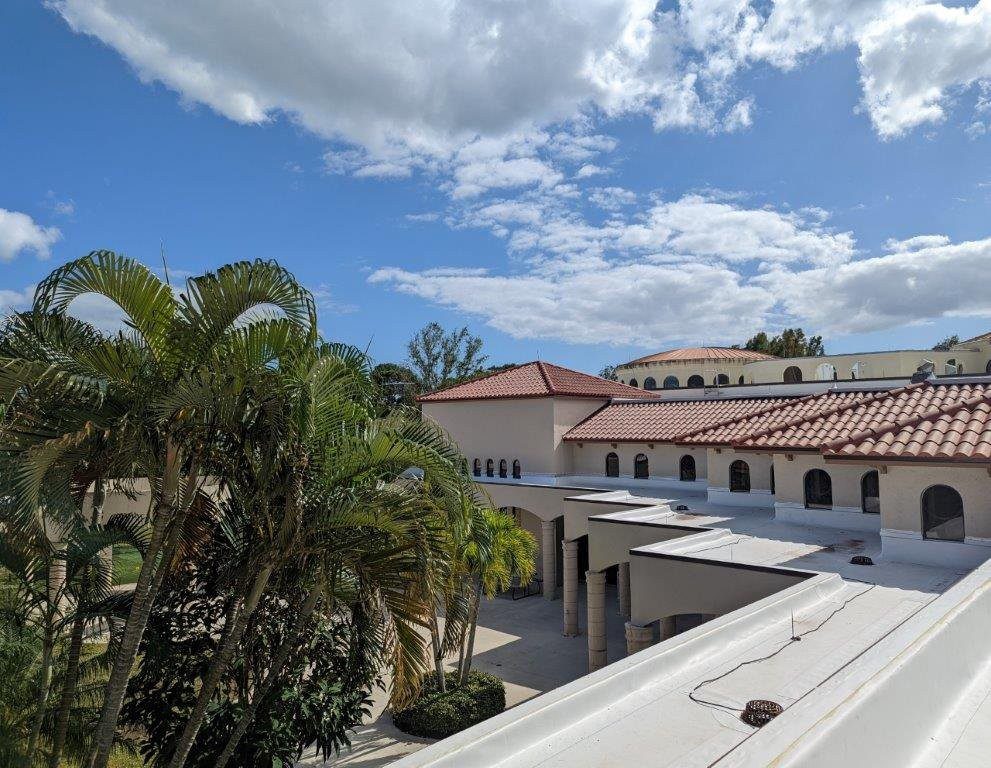
Commercial Roof Replacement by Expert Roofing Services
Restore, Maintain,
or Replace
Most flat and low-slope roofs reach a board meeting labelled "needs replacement." A meaningful share of them don't — and the difference is hundreds of thousands of dollars on a multi-building property.
Silicone Restoration
If the existing membrane is sound but weathered, a fluid-applied silicone system renews the waterproofing over the roof you already own — no tear-off, no landfill, minimal disruption to the property, and a new renewable warranty.
Repair & Preventive Maintenance
Scheduled inspections, drain and scupper clearing, seam and penetration checks, and small repairs done while they're small. A maintenance program is also what keeps most commercial manufacturer warranties valid.
Full Replacement
Tear-off to the deck, wet insulation identified and replaced, new TPO or modified bitumen system with tapered insulation where ponding demands it. Phased building-by-building so the property keeps functioning.
Commercial Systems for Florida Properties
Every system below carries Florida Product Approval and is installed to the wind uplift requirements your buildings and address demand — including High-Velocity Hurricane Zone assemblies.
Silicone Roof Coating
High-solids silicone over prepared existing membrane. Permanent ponding-water resistance, reflective white finish, and a renewable warranty — the restoration path in full.
Silicone Coating → Single-Ply MembraneTPO
Heat-welded seams, reflective white membrane, and the most widely specified flat-roof system in commercial roofing. The standard replacement answer for most low-slope buildings.
TPO Systems → Repair & MaintenanceFlat Roof Repair
Seam failures, ponding areas, flashings, drains and scuppers — diagnosed with moisture readings, repaired from an agreed unit-price schedule.
Flat Roof Repair → Sloped CommercialMetal Roofing
Standing seam and PBR panel for clubhouses, offices, and mixed-slope association properties — aluminium specified near salt water as standard.
Metal Roofing →What Commercial Work Actually Involves
—Per-building condition reports
Each building assessed and photographed separately, with its own remaining-life estimate and its own line in the pricing. Boards phase work across budget years far more easily when the roofs aren't presented as one undifferentiated number.
—Unit pricing agreed up front
Drains, scuppers, coping, penetrations, and flashing details are priced per unit before work begins. When a tear-off exposes more of them than the estimate assumed, the price comes from the approved schedule — not from a change-order negotiation with the crane on site.
—Occupied properties
Residents, tenants, and businesses stay in the buildings while we work. That means staged material deliveries, protected walkways and parking, odour and noise planning, and a notice schedule the property manager can circulate before we arrive.
—Ponding water and drainage
Standing water 48 hours after rain shortens every membrane's life and voids some warranties. We address the cause — tapered insulation, added drains, retrofitted scuppers — not just the symptom, and silicone is specified where ponding can't be fully engineered away.
—Warranties that survive year nine
Manufacturer system warranties on commercial work carry inspection and maintenance conditions most owners never hear about. We register the warranty, hand you the terms, and offer the maintenance program that keeps it enforceable.
—Two licenses, one contractor
Roofing CCC1332394 and general contracting CGC1533052. When a commercial tear-off uncovers deteriorated decking, rusted structural deck, or damaged fascia, the structural work proceeds under the same contractor and permit path instead of stalling the project.
Two Things a Property Manager Can Check This Week
Walk the roofs 48 hours after rain. Mark every ponding area on a site plan with your phone's camera. The pattern of standing water is the single most useful document you can bring to a roofing conversation — ours or anyone's.
Pull the file on your newest roof's warranty. Check whether it requires documented periodic inspections. If it does and none are on file, the warranty the association is counting on may already be voidable — fixable now, expensive to discover during a claim.
Commercial Roofing FAQs
Our flat roofs are 18 years old. Do they need replacing?
Not necessarily — age alone doesn't decide it. If moisture readings show the insulation is dry and the membrane is intact, a silicone restoration renews the waterproofing at a fraction of replacement cost. If the insulation is saturated, restoration would seal water in and replacement is the honest answer. The assessment tells us which, building by building.
What does a board actually receive from you?
A per-building condition report with photographs and remaining-life estimates, a single specification across the property, pricing broken out by building and by line item, and a unit-price schedule for detail work. It's built to be forwarded to the board and dropped into a reserve study without rewriting.
Can you phase the work across budget years?
Yes — that's precisely why we report per building. Boards commonly sequence the worst buildings first and schedule the rest across two or three fiscal years, with the unit-price schedule locked so later phases aren't repriced from scratch.
How disruptive is roofing work on an occupied property?
Managed properly, far less than boards fear. Deliveries are staged, walkways and parking protected, and residents receive a notice schedule before we start. Silicone restoration is the least disruptive path of all — no tear-off means no debris chutes, no dumpster rotation, and dramatically less noise.
Silicone coating versus TPO replacement — how do we decide?
Moisture first. A survey tells us whether the existing insulation is dry. Dry and sound: silicone restores the roof for a fraction of the cost, resists ponding water permanently, and can be recoated later to extend life again. Wet: replacement, because coating over saturated insulation buys a warranty dispute, not a roof. We show the readings either way.
Do you handle the manufacturer warranty registration?
Yes, and we hand you the actual terms — including the inspection and maintenance conditions that keep commercial warranties enforceable. Our preventive maintenance program is built around those conditions, so the paperwork that protects the association actually exists when it's needed.
What if you find damage the estimate didn't include?
It's priced from the unit schedule the board already approved — per drain, per scupper, per sheet of decking. You'll see photographs of everything before it's billed. No mid-project change-order negotiations, which is where commercial roofing budgets traditionally die.
Are you licensed for structural work if the deck is bad?
Yes. We hold both a roofing licence (CCC1332394) and a general contracting licence (CGC1533052) — both verifiable at the Florida DBPR. Deteriorated decking or structural repairs proceed under the same contractor rather than stalling the project while a second one is sourced.
Give Your Board a Document,
Not a Sales Pitch
A property assessment with photographs, per-building condition and remaining-life findings, and pricing structured for a reserve study — yours to keep and to put in front of any contractor, including us.